


top of pageSkip to Main Content
Smiling older woman standing in her backyard garden

Knee pain treatment in Millburn, NJ.

Climb stairs and hike trails again.

Non-surgical knee treatments that target the source of your pain, not just the symptoms. We help you take the stairs, kneel in the garden, and get back on the trail without dreading every step.

Rated 5.0 out of 5 on Google

Dr. Aditi Menon, MDPhysical Medicine & Rehabilitation
Dr. Sujoy Menon, MDInterventional Radiology
Check your coverage first

Knee pain conditions we treat.

Knee pain has many sources. These are the conditions we diagnose and treat most often.

  • Osteoarthritis

    Cartilage wear bringing stiffness and pain, often felt first on stairs.

  • Meniscus Tears

    Torn cartilage that causes pain, swelling, and catching when you twist.

  • ACL/MCL/PCL Injuries

    Ligament sprains and tears that leave the knee unstable and weak.

  • Patellar Tendonitis

    Tendon inflammation below the kneecap from running, jumping, or stairs.

  • Baker's Cyst

    A fluid-filled cyst behind the knee causing tightness and swelling.

  • Knee Bursitis

    Inflamed sacs that make the joint ache and swell, worst when kneeling.

Person clutching a painful knee while seated at home

Why knee pain shouldn't be ignored.

Untreated knee problems get harder to treat, and the risk of lasting damage rises the longer pain lingers.

  • Persistent, recurring pain. Pain that returns after rest and medication signals a structural problem.
  • A shrinking active life. Everyday activities get harder, weakening muscles and stressing the joint.
  • Reliance on medication. Painkillers mask symptoms without treating the cause, often needing higher doses.

Alternatives to knee replacement.

Told a knee replacement is ahead? A structured, non-surgical plan may help delay surgery, sometimes by years:

  • Guided exercise to strengthen the muscles that protect the joint
  • Bracing that offloads the painful side of the knee
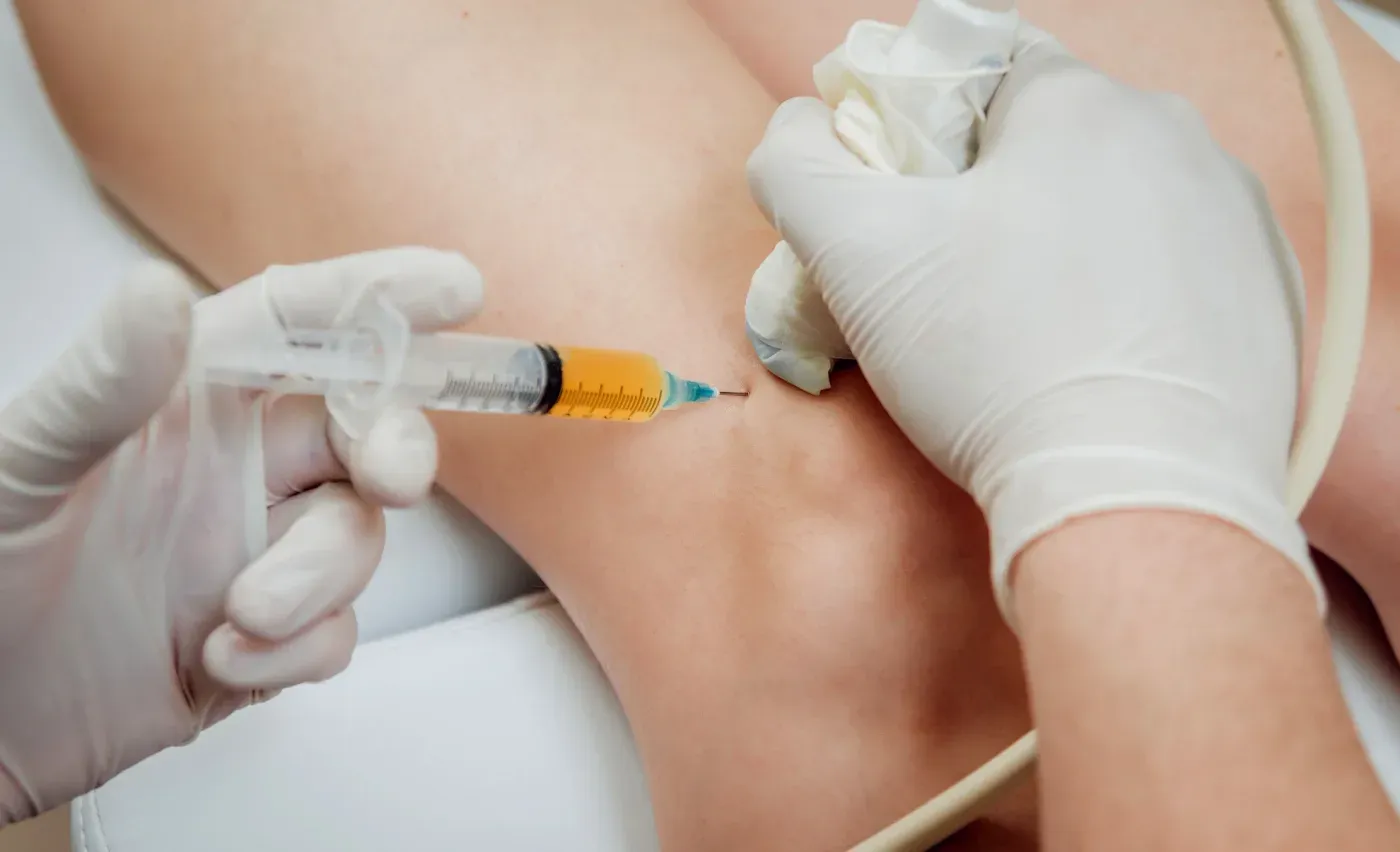
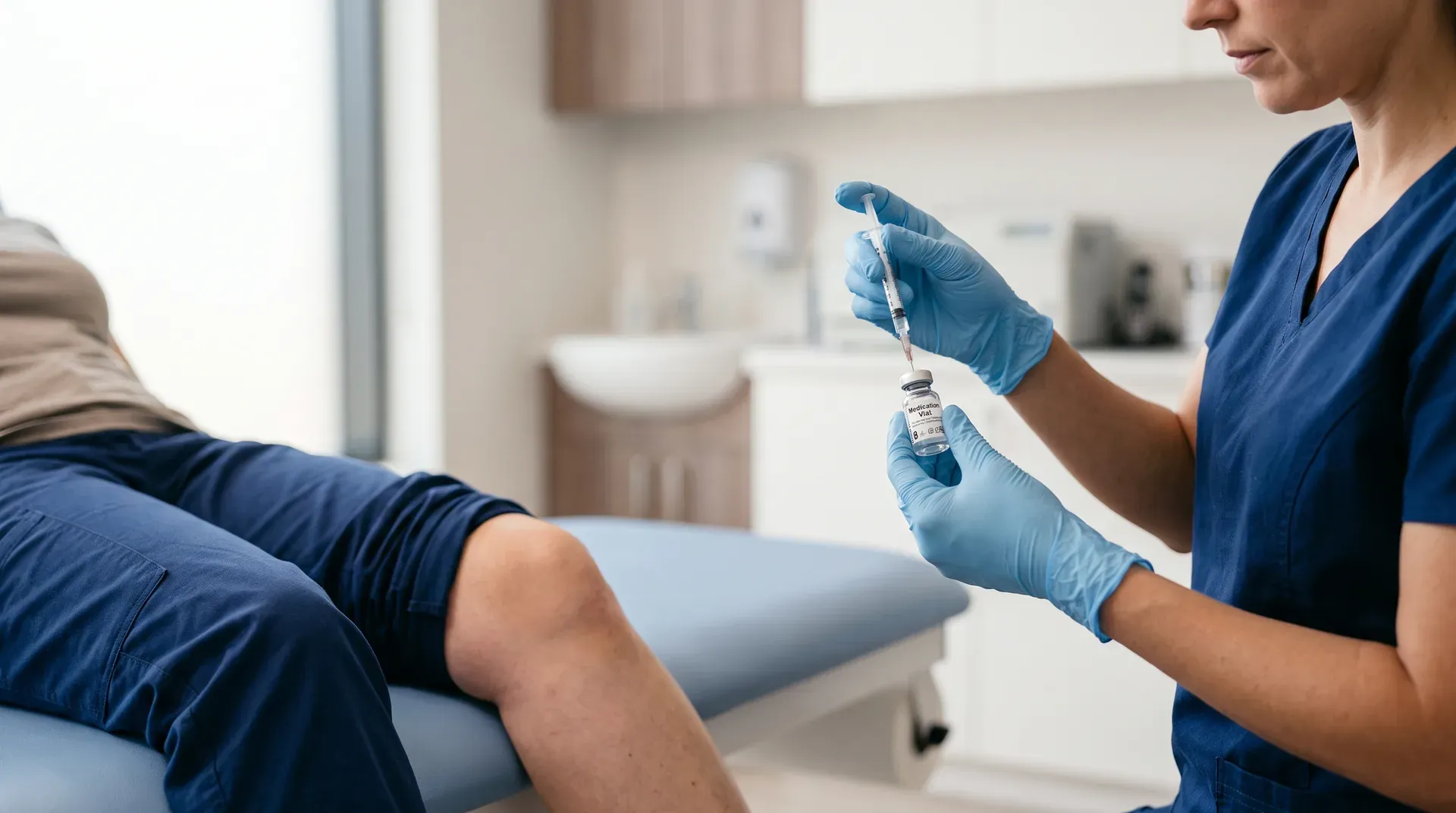
  • Injections, from cortisone for flares to gel that restores lubrication
  • Regenerative options that support the body's own healing

It is not a cure.

When night pain, locking, or deformity mean surgery is the better path, we say so honestly.

Considering replacement? A second opinion before knee surgery can help you discuss the options already tried and the next step for your situation.

What to expect at your first visit.

Same-week appointments are usually available. Here is how your first visit unfolds.

  1. Step 1

    History and exam

    We review how your pain began and check your knee's movement, stability, and strength.

  2. Step 2

    Imaging when needed

    In-office ultrasound or an MRI shows what is happening inside the joint.

  3. Step 3

    A diagnosis explained

    You leave knowing what is causing your pain, in plain language.

  4. Step 4

    A personalized plan

    We match treatment to your condition and your goals.

  5. Step 5

    Recovery support

    Strengthening exercises, activity guidance, and support through your recovery.

Meet the Millburn NJ pain specialist team.

A pain physician and an interventional radiologist, in one office.

Dr. Aditi Menon at the Millburn NJ office

Dr. Aditi Menon, MD

Physical Medicine & Rehabilitation

Board-certified in Physical Medicine & Rehabilitation, trained at SUNY Downstate and NewYork-Presbyterian / Weill Cornell. She specializes in musculoskeletal pain, sports medicine, and regenerative treatments, from ultrasound-guided injections to electrodiagnostic (EMG) testing.

Dr. Sujoy Menon at the Millburn NJ office

Dr. Sujoy Menon, MD

Interventional Radiology

Board-certified Interventional Radiologist, trained at Rutgers Robert Wood Johnson and Beth Israel - Mount Sinai. He specializes in image-guided joint treatments and complex spinal and vascular interventions, and is affiliated with multiple NJ hospitals.

5.0 Rated 5.0 out of 5 on Google

Dr. Menon is the most competent and caring doctor I know! I’ve had several knee injections to help with inflammation and arthritis and Dr. Menon is so gentle, I never know when she is finished. I travel a great distance to see her, but I wouldn’t have it any other way.

Arlene S. · Knee patient, Google review

Knee pain questions, answered.

Still unsure? Call us and a person will answer.

What Are the 3 Injections for Knee Pain?
Corticosteroid for inflammation, hyaluronic-acid gel for lubrication, and regenerative options such as PRP for healing, all delivered under live ultrasound guidance.
How Long Do Knee Injections Last?
It varies. Cortisone often lasts weeks to months, gel around six months for many patients, and regenerative options several months.
Are Gel Injections for Knees Worth It?
Many patients with mild to moderate osteoarthritis report meaningful relief. Gel works best earlier in arthritis and does not reverse it.
Does Insurance or Medicare Cover Knee Injections?
Coverage varies by plan and type. Corticosteroid injections are widely covered when medically indicated, and gel injections are covered by many plans once criteria are met. Medicare is accepted directly. For all other insurers, our team provides free benefits verification before your visit. We verify first on our insurance verification page.
Can Injections Help Me Avoid Knee Replacement?
For many patients, injections plus strengthening may delay surgery, sometimes by years. They are not a cure; night pain, locking, or deformity mean surgery should be discussed.
Why Does My Knee Hurt When I Climb Stairs?
Stairs load your kneecap heavily, so cartilage irritation, patellofemoral pain, and early arthritis often show there first. Persistent stair pain deserves evaluation.

Request Online

Request your knee pain appointment

Send your request in three quick steps. Choose your reason for visiting, pick a time that works, and we'll call to confirm. Same-week appointments are usually available.

45 Essex St, Suite 202, Millburn, NJ 07041
Mon 9:30–3 · Tue–Fri 9:30–6
Near the Millburn Train Station on Essex Street
Parking lot entrance is before Holmes Street. From Millburn Ave, U-turn after the PNC Bank

Step 1 of 3: Reason for your visit

How can we help?

Choose one to continue.

bottom of page